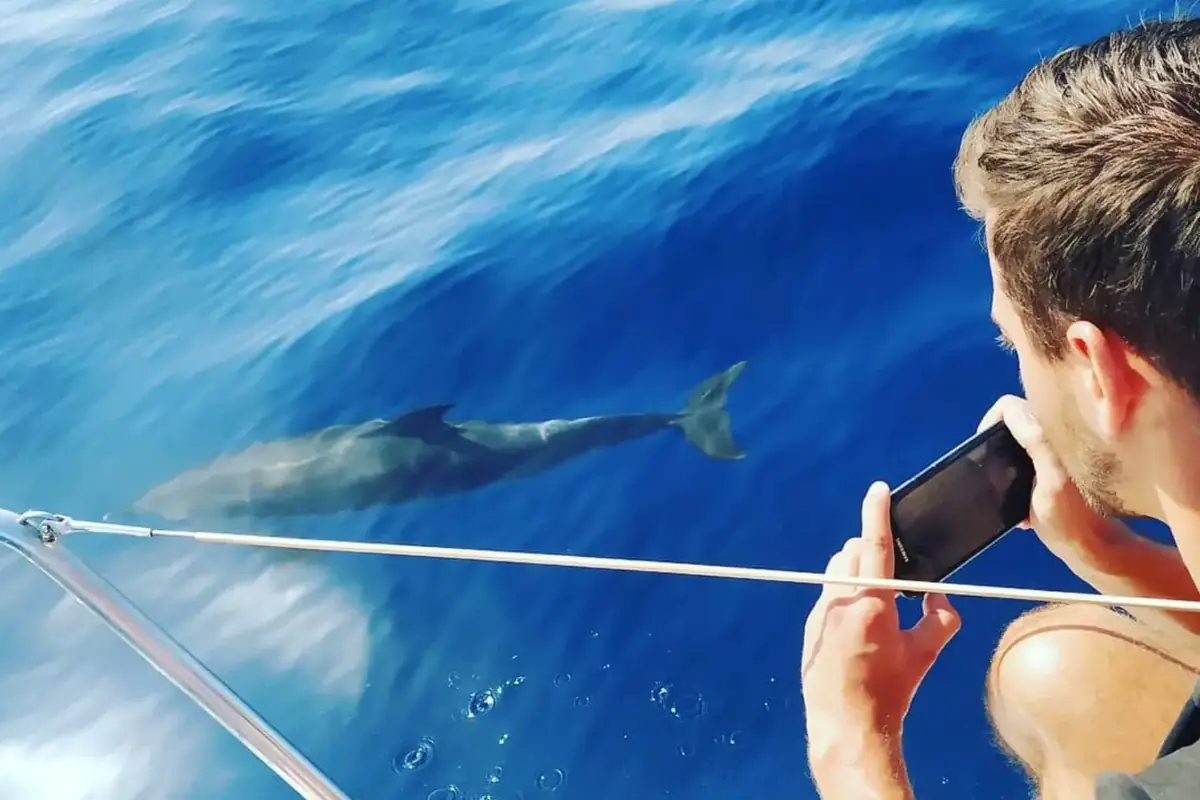

Tenerife is one of the few places in Europe where you can see whales and dolphins on almost any day of the year. Between Tenerife and La Gomera the seabed drops to great depths just a few kilometres from the coast, and that water is protected for marine life.
Here is what you can realistically expect from a trip — from the crew that goes out several times a day from Puerto Colón, Costa Adeje.
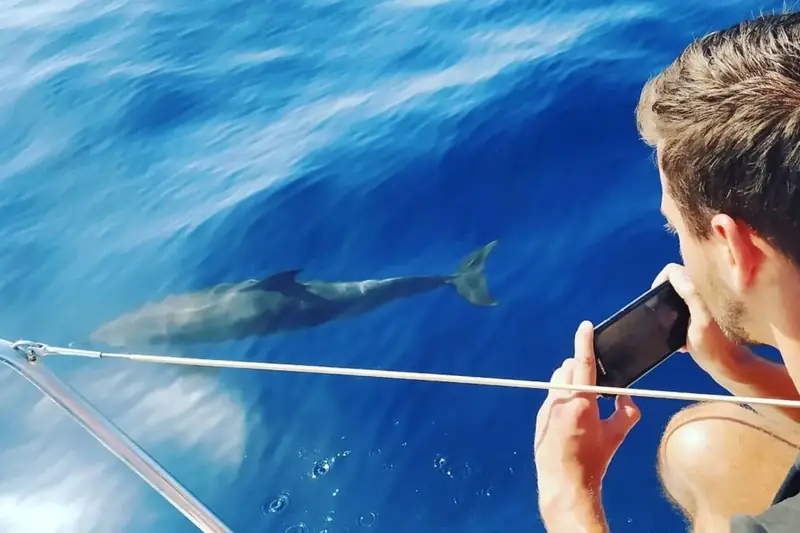
Why Tenerife is so good for whales
Deep water close to shore, warm currents and plenty of squid make the south-west coast a home for cetaceans, not just a stop on a migration route. More than 20 species of whales and dolphins have been recorded around the Canary Islands.
The strip of sea between Teno and Punta de Rasca is a Special Area of Conservation, and whale watching here is regulated: boats need a licence, and our whale-watching yachts hold the Barco Azul licence.
Which animals you are likely to see
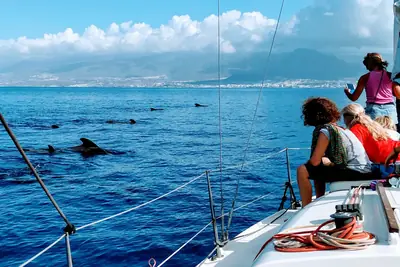
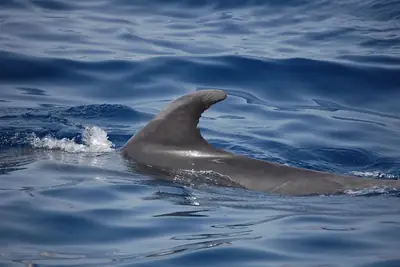
Short-finned pilot whales are the stars. A resident population lives here all year, and we see them on almost every trip. Bottlenose dolphins are resident too; we meet them on about half of our trips.
With luck you may also see Atlantic spotted dolphins, common dolphins, Risso’s dolphins or a Bryde’s whale passing through — but nobody can promise those. More about each species in our guide to whales in Tenerife.
The best time to go
Any month works, because the pilot whales do not migrate. Mornings often bring the calmest sea, which makes spotting easier and the trip more comfortable; afternoon trips have warmer light for photos. Our shared tour leaves every day at 09:30, 12:30 and 15:30.
How responsible whale watching works
The rules are clear: keep a minimum distance, approach slowly and from the side, never cut across the animals’ path, limit the time spent with each group, and never feed or swim with them.
On a quiet sailing yacht this comes naturally. We switch to slow speed, wait — and let the animals decide how close they come.
Swimming and snorkelling
We never swim with whales or dolphins. Instead, when the sea allows, we anchor in a calm bay — usually off Diego Hernández beach — for about 30 minutes of swimming and snorkelling. The water is clear and full of fish, and masks are on board.
What to bring
- sunscreen, a hat and sunglasses;
- a light jacket — it is cooler on the water;
- swimwear and a towel;
- a phone or camera;
- a seasickness tablet, if you need one.
Shared trip or private yacht?
On our shared sailing tour you join a small group — never more than 11 guests — for €49 per adult and €39 per child. If you want the boat just for your family or friends, a private whale-watching yacht costs €399 for three hours.